In the field of water treatment, terminology matters. A common point of confusion among professionals and plant operators is whether Poly Aluminium Chloride (PAC) functions as a coagulant or a flocculant. Understanding this distinction is essential for optimizing chemical dosing, ensuring treatment efficiency, and meeting discharge or drinking water standards.
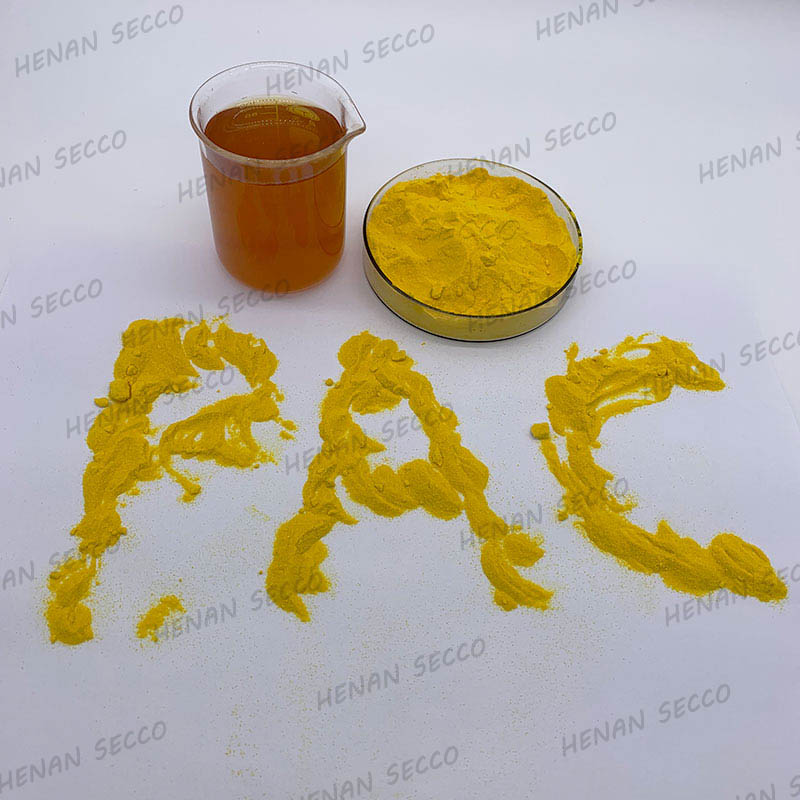
As a manufacturer dedicated to the production of water treatment chemicals, Henan SECCO Environmental Protection Technology Co., Ltd. combines deep industry knowledge with practical experience to help customers make the right choice. In this article, we clarify the role of PAC and explain how it fits into the coagulation–flocculation process.
Before determining the role of PAC, it is important to understand the two key steps in solid–liquid separation:
| Term | Function | Mechanism | Typical Chemicals |
|---|---|---|---|
| Coagulant | Destabilizes suspended particles and colloids | Charge neutralization; reduces repulsive forces between particles | PAC, aluminum sulfate, ferric chloride |
| Flocculant | Bridges destabilized particles into larger, settleable flocs | Adsorption bridging; often involves long-chain polymers | Polyacrylamide (PAM), natural polymers |
In simple terms:
A coagulant neutralizes the electrical charges that keep particles apart.
A flocculant binds the neutralized particles together to form visible flocs.
Both steps are essential in conventional water treatment trains, but they are performed by different types of chemicals.
Poly Aluminium Chloride (PAC) is primarily a coagulant. It belongs to the family of inorganic polymeric coagulants. When added to water, PAC rapidly hydrolyzes to form highly charged polynuclear aluminum complexes. These complexes carry strong positive charges, enabling them to:
Neutralize negatively charged colloids (such as clay, organic matter, and microorganisms)
Compress the electrical double layer around suspended particles
Initiate micro-floc formation through charge neutralization and initial bridging
Because PAC performs the critical function of destabilizing particles, it is correctly classified as a coagulant in water treatment terminology.
Under certain circumstances, PAC can exhibit mild bridging effects due to its polymeric structure, but this is not its primary mechanism. Compared to high‑molecular‑weight organic flocculants like polyacrylamide (PAM), PAC has a much lower molecular weight and limited ability to form large, inter-particle bridges.
In practice, PAC is often used together with a flocculant:
PAC serves as the primary coagulant to achieve particle destabilization.
Anionic or nonionic PAM (polyacrylamide) is then added as a flocculant to agglomerate the micro-flocs into large, rapidly settling flocs.
This combined approach—PAC + PAM—is widely adopted in municipal drinking water plants, wastewater treatment facilities, and industrial effluent systems to achieve optimal clarity and sludge dewatering performance.
Regardless of whether it is used alone or with a flocculant, PAC plays several critical roles in a treatment plant:
In surface water treatment (rivers, lakes, reservoirs), PAC effectively removes turbidity, color, algae, and natural organic matter. Its wide effective pH range (5.0–9.0) and good low‑temperature performance make it suitable for seasonal variations.
In secondary and tertiary treatment stages, PAC aids in phosphorus removal and further reduces suspended solids. It can be dosed before clarifiers or directly into biological basins for simultaneous chemical phosphorus removal.
For industries such as textiles, papermaking, electroplating, and chemicals, PAC helps break emulsions and precipitate heavy metals, preparing effluent for downstream biological treatment or discharge.
When combined with organic flocculants, PAC conditions sludge to improve dewatering efficiency, reducing sludge volume and disposal costs.
Henan SECCO Environmental Protection Technology Co., Ltd. specializes in the manufacturing and supply of high‑performance polyaluminum chloride and polyacrylamide. With years of focus on coagulation and flocculation chemistry, we offer:
Consistent quality: Our PAC is produced using premium raw materials under strict process control, ensuring stable aluminum content and basicity.
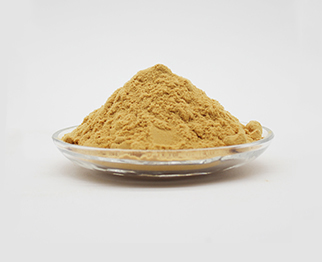
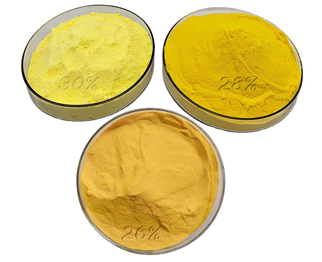
Tailored specifications: We provide PAC in various forms (spray‑dried powder, drum‑dried powder, liquid) with customized basicity levels to match your specific water quality.
Application expertise: Our technical team assists with jar testing, dosage optimization, and on‑site commissioning to maximize treatment efficiency.
Integrated supply: As a manufacturer of both coagulants (PAC) and flocculants (PAM), we serve as a one‑stop solution for your solid–liquid separation needs.
To answer the question “PAC acts as coagulant or flocculant?” — PAC is fundamentally a coagulant. Its primary role is charge neutralization and particle destabilization. While it can contribute to floc formation, it is not a substitute for high‑molecular‑weight flocculants like PAM. In modern water treatment plants, PAC is most effectively used as a primary coagulant, often in combination with a flocculant to achieve superior settling performance and effluent clarity.
Selecting the right chemical and understanding its role is the first step toward efficient, cost‑effective water treatment. Henan SECCO Environmental Protection Technology Co., Ltd. is committed to providing not only high‑quality products but also the technical support necessary to ensure your plant operates at its best.
For more information about our polyaluminum chloride, polyacrylamide, and customized treatment solutions, please contact Henan SECCO Environmental Protection Technology Co., Ltd. Our team is ready to support your water treatment success.
© Henan SECCO Environmental Protection Technology Co., Ltd. All rights reserved.