News
Home > News

Comprehensive Guide to Selecting Polyacrylamide (PAM) for Sand Washing Wastewater Treatment

2026-10-17 11:11:29

1. Introduction: The Sand Washing Wastewater Challenge

Sand washing plants, aggregate quarries, and mineral processing facilities generate massive volumes of high-turbidity slurry daily. As environmental discharge standards and water recycling mandates tighten globally, achieving rapid solid-liquid separation, clear overflow for closed-loop recycling, and dense sludge dewatering is vital for operational profitability.
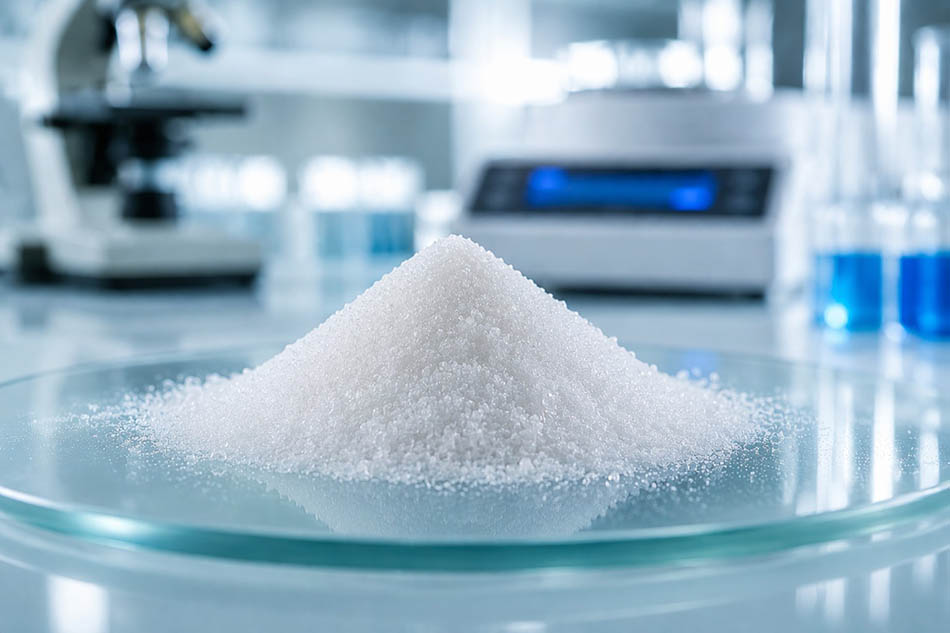
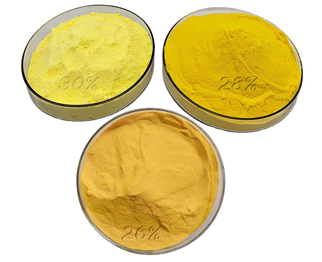
polyacrylamide

Polyacrylamide (PAM, CAS: 9003-05-8) is the most critical organic polymer flocculant used in sand washing thickeners, settling ponds, and filter presses. However, incorrect polymer selection frequently leads to slow sedimentation, high chemical consumption, muddy overflow, or blinding of filter press cloth.

This engineering guide provides a complete roadmap for selecting, dosing, and troubleshooting Polyacrylamide in sand washing wastewater treatment.


2. Water Quality Characteristics of Sand Washing Effluent

Sand washing wastewater varies significantly depending on the geological origin of the raw material (river sand, sea sand, manufactured mountain aggregate, or silica sand). Key characteristics include:

  1. Extremely High Suspended Solids (SS): Typically ranges from  20,000 mg/L  to  80,000 mg/L  ( 2%–8%  solid content), creating heavy silt slurries.
  2. Fine Colloid Particle Size: Silt and clay particles (illite, montmorillonite, kaolin) are often finer than  20 \mum  ( <0.02 mm ), exhibiting strong Brownian motion and poor natural sedimentation.
  3. Negative Zeta Potential: Silt and clay colloids naturally carry negative surface charges, causing repulsive forces that prevent natural agglomeration.
  4. Varying pH and Hardness: Effluent pH generally sits between  6.5 and 8.5 , but dissolved minerals ( Ca2+,Mg2+ ) and clay types dictate flocculation kinetics.

3. Polymer Selection Matrix & Comparison Table

To bridge the negatively charged clay particles into large, rapidly settling flocs, Anionic Polyacrylamide (APAM) with high molecular weight and medium-high hydrolysis is the primary choice. In dual-dosing systems, Polyaluminum Chloride (PAC) is often added as a primary coagulant to neutralize charges before PAM bridging.

Flocculant Selection Comparison Table for Sand Washing

Polymer Type / Model Molecular Weight (Dalton) Hydrolysis / Charge Degree Primary Function & Stage Sedimentation Speed Mud Cake Firmness Recommended Use Case
High MW Anionic PAM (SECCO APAM-18) 16M – 20M 20% – 28% Thickener Settling & Clarification ★★★★★ (Ultra-fast, >15 m/h) ★★★★☆ Standard Sand Washing (Most Common)
Ultra-High MW Anionic PAM (SECCO APAM-22) 20M – 25M 25% – 32% High Clay / Muddy Slurry Clarification ★★★★★ (>18 m/h) ★★★★★ Heavy Kaolin / Micro-fine Silt Slurries
Non-ionic PAM (SECCO NPAM-12) 10M – 14M < 5% Acidic / High-Salinity Effluent ★★★☆☆ (Moderate) ★★★☆☆ Low pH or High Electrolyte Wash Water
Medium Cationic PAM (SECCO CPAM-30) 8M – 12M 20% – 35% Centrifuge / Belt Filter Press Dewatering ★★★★☆ ★★★★★ (Dry mud cake) Organic-rich Sludge or Deep Slurry Dewatering
PAC + APAM Dual Coagulation PAC (28%-30%) + APAM Charge Neutralization + Bridging Pre-treatment + Rapid Thickener Settling ★★★★★ ★★★★★ High Colloid Turbidity & Low Water Temperature

4. Dosing Concentration & Usage Calculation Guide

To maximize flocculation efficiency and prevent polymer wastage, accurate solution preparation and dosage calculations are crucial.

Step 1: Stock Solution Preparation Concentration

Polyacrylamide dry powder must always be fully dissolved in clean water prior to inline injection:

  • Recommended Preparation Concentration ( Cprep ):  0.1% to 0.2%  ( 1 kg to 2 kg of dry powder per 1 m3 of clean water ).
  • Note: Preparing solutions above  0.3%  increases viscosity excessively, leading to uneven mixing and pump cavitation.

Step 2: Formula for Preparation

PAM Powder Weight (kg)=Preparation Tank Volume (m3)×Target Concentration (%)×10  Example: For a  5 m3  dissolving tank at  0.15%  target concentration:  Weight=5×0.15×10=7.5 kg of SECCO APAM Powder

Step 3: Effluent Treatment Dosage Calculation Formula

The actual active PAM dosage per cubic meter of wastewater is calculated as follows:

Active PAM Dosage (g/m3 or ppm)=Dosing Pump Flow Rate (m3/h)×Cprep(%)×10,000Wastewater Flow Rate (m3/h)

Real-World Field Calculation Example

  • Wastewater Processing Capacity:  500 m3/h
  • PAM Solution Prepared Concentration:  0.1% (1,000 mg/L)
  • Dosing Pump Flow Rate:  10 m3/h

Active Dosage=10 m3/h×0.1%×10,000500 m3/h=2.0 g/m3 (ppm)

Typical Sand Washing Dosage Benchmarks:

  • Settling Thickener:  1.5 – 5.0 g/m3  ( 1.5 – 5.0 ppm )
  • Filter Press Sludge Dewatering:  15 – 50 g per metric ton of dry solid mud

5. Troubleshooting: Fish-Eye Lumping and Dissolution Issues

“Fish-eye” refers to undissolved gelatinous clumps of PAM powder surrounded by a hydrated outer skin, which causes pipe clogging, wasted chemical, and filter cloth blinding.

       [ Dry PAM Powder ]
              │
       ┌──────┴────────────────────────────────┐
       ▼                                       ▼
[ Proper Dry Dispersion ]             [ Direct Fast Dumping ]
       │                                       │
       ▼                                       ▼
  Uniform Hydration                   "Fish-Eye" Sticky Clumps
(Complete Dissolution in 40-50 min)   (Pipe Clogging & High Chemical Waste)

Root Causes and Solutions

Problem Phenomenon Root Cause Engineering Solution
Large Gel Clumps (“Fish-Eyes”) Dumping dry powder too quickly into the water surface Use an automated dry powder feeder or a water ejector. Sprinkle powder evenly over the vortex created by the stirrer.
Long Dissolution Time (>60 min) Low water temperature ( <10∘C ) or low stirrer speed Increase dissolving water temperature to  20∘C–30∘C  (never exceed  45∘C ). Maintain stirrer speed at  200–400 RPM .
Viscosity Loss / Weak Flocs High-speed shear degradation or overnight storage Avoid high-shear centrifugal pumps; use screw pumps or diaphragm pumps. Prepared PAM solution should be consumed within 24–48 hours.
Sticky Filter Cloth Overdosing of PAM or excessive molecular weight Reduce PAM dosage by  15%–20%  or perform a beaker titration test to recalibrate optimal charge density.
Cloudy Supernatant Overflow Insufficient charge neutralization Pre-dose  10–30 ppm  of Polyaluminum Chloride (PAC) 10–20 meters upstream before adding APAM.

6. Frequently Asked Questions (FAQ) for Procurement & Plant Managers

Q1: How do I know whether my sand washing plant needs Anionic or Cationic PAM?

A: In over  90%  of sand washing and aggregate operations, Anionic Polyacrylamide (APAM) is the correct choice because inorganic sand and clay particles carry negative surface charges. Cationic PAM (CPAM) is only required when the wastewater contains significant organic pollutants or for specific centrifuge sludge dewatering stages. Henan SECCO offers free lab beaker testing on your water samples to confirm the exact model.

Q2: What is the shelf life and proper storage condition for SECCO PAM powder?

A: When stored in its original, unopened packaging in a cool, dry, and well-ventilated warehouse (below  35∘C ), SECCO PAM powder has a shelf life of 24 months. Because PAM is hygroscopic, any opened bag must be sealed immediately to prevent moisture absorption and caking.

Q3: What packaging specifications and OEM options are available for overseas shipments?

A: We provide:

  • Standard 25kg multi-wall paper-plastic composite bags with PE moisture-proof inner liners.
  • 750kg or 1,000kg palletized Jumbo bags (bulk bags).
  • Custom OEM brand printing, language-specific warning labels, and pallet shrink-wrapping for containerized sea freight.

Q4: Can Henan SECCO provide technical selection and dosage optimization before order placement?

A: Yes. Henan SECCO provides comprehensive “Butler Service”. You can send us 1–2 liters of raw sand washing wastewater or share your slurry parameters (solid content, settling velocity, equipment specs). Our laboratory will conduct jar tests, determine the optimum molecular weight and hydrolysis, and deliver a detailed dosing cost analysis report.

Q5: How much does PAM treatment typically cost per cubic meter of sand washing wastewater?

A: Under optimal selection and dosing conditions, active APAM consumption is typically  1.5 to 3.5 g/m3 . At current FOB prices, the chemical treatment cost is approximately $0.003 to $0.008 USD per cubic meter of wastewater, delivering high cost-efficiency and rapid return on investment.
Contact Henan SECCO Technical Team

  • Website: https://www.hnsecco.com
  • Phone / WhatsApp: +86-18703633076
  • Location: Water Purification Materials Emergency Industrial Park, Gongyi City, Henan Province, China

Home Tel Mail Inquiry